Irregular Octagon Area Calculator
Calculate the area of an irregular octagon (8-sided polygon) using coordinates and the Shoelace (Gauss) Formula. Works for land plots, floors, roofs, and irregular layouts.
| # | X | Y |
|---|
In geometry, shapes are easy to handle when they follow symmetry. A regular octagon—with equal sides and angles—fits neatly into formulas. But real-world shapes rarely behave this way.
Whether you are working with land boundaries, architectural layouts, or custom designs, you often encounter an irregular octagon—an eight-sided shape where no two sides or angles are necessarily the same.
This is where most calculations become confusing. There is no single formula you can apply directly. Instead, you need a methodical approach. That is exactly why an irregular octagon area calculator becomes essential—it simplifies a complex shape into manageable steps and delivers an accurate result without guesswork.
What Is an Irregular Octagon?
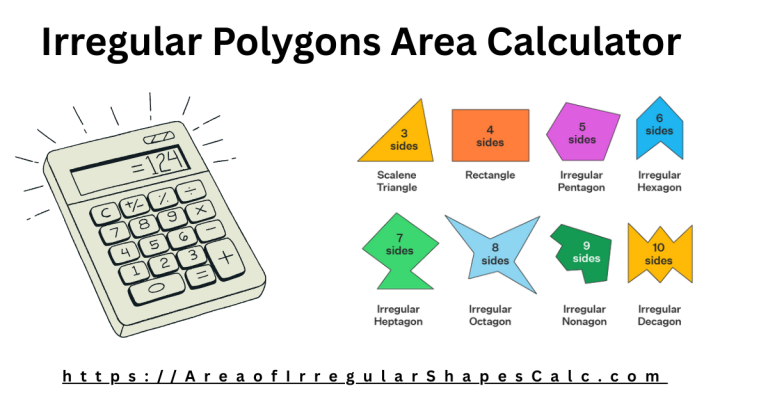
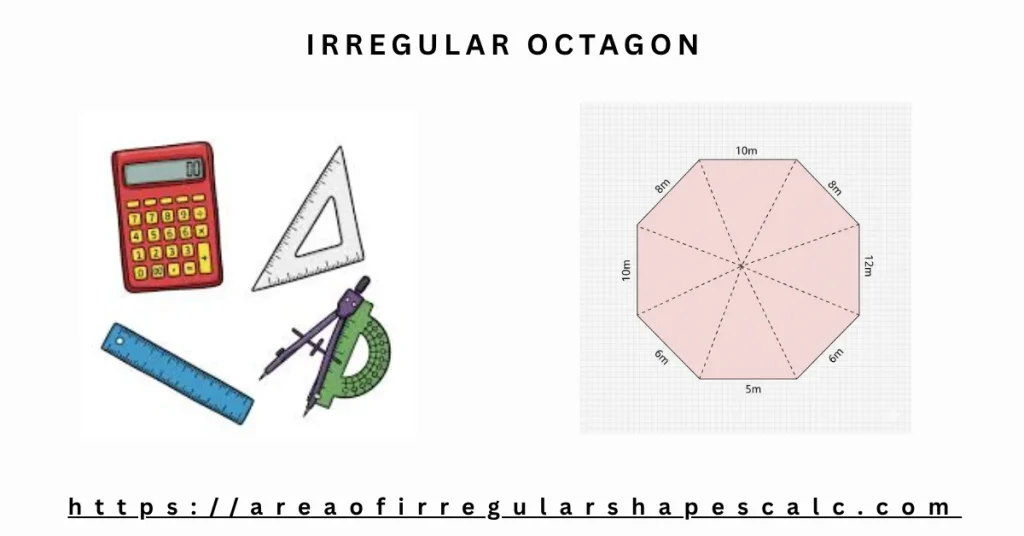
An octagon is any polygon with eight sides. When all sides and interior angles are equal, it is called a regular octagon. However, when side lengths differ or angles vary, the shape becomes an irregular octagon.
In practice, irregular octagons appear more often than regular ones. A plot of land may have eight uneven boundaries. A floor plan may include extensions or cut sections that form an eight-sided layout. Even design elements in construction or landscaping can result in irregular octagonal shapes.
Understanding this difference is important because regular formulas do not apply directly to irregular shapes.
Why There Is No Single Formula for Irregular Octagon Area
Unlike standard geometric figures, an irregular octagon does not follow a fixed pattern. Each side and angle can vary independently, which means the shape cannot be solved using one universal formula.
This is why many people search for ways to calculate the area of an irregular octagon or look for tools that can handle such complexity. The challenge is not the math itself—it is the structure of the shape.
To solve this, the shape must first be broken down into simpler components. Once that is done, the area can be calculated accurately.
How to Calculate Area of an Irregular Octagon
Instead of relying on a single formula, professionals use structured methods to calculate the area of irregular shapes. These methods are practical, flexible, and work in real-world situations.
1. Dividing into Triangles
One of the most reliable approaches is to divide the octagon into multiple triangles. By drawing diagonals from one vertex to others, the shape can be split into smaller triangular sections.
Each triangle’s area is calculated separately, and the results are added together to get the total area. This method works well when you have diagonal measurements or can estimate internal divisions.
2. Breaking into Rectangles and Trapezoids
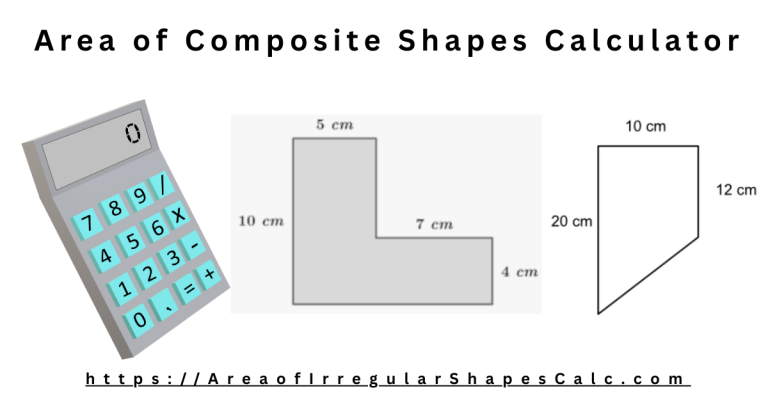
In many cases, an irregular octagon can be approximated by splitting it into rectangles and trapezoids. This method is especially useful for floor plans or land measurements where edges align with horizontal or vertical directions.
By calculating each section individually and summing them, you can achieve a highly accurate total area. This approach is often referred to as the rectangle method in practical measurement.
3. Using Coordinate Geometry (Advanced Method)
When the coordinates of each vertex are known, the area can be calculated using coordinate-based formulas. This method is precise and widely used in mapping, surveying, and digital tools.
Although more technical, it eliminates approximation and provides exact results when coordinates are available.
How the Irregular Octagon Area Calculator Works
An irregular octagon area calculator simplifies all these methods into a single tool. Instead of manually dividing the shape, the calculator processes the input values and performs the calculations instantly.
Typically, the calculator works by:
- Taking measurements such as side lengths, diagonals, or coordinates
- Internally dividing the shape into smaller geometric components
- Calculating each section’s area
- Summing all sections to produce the total area
This eliminates manual errors and saves time, especially when dealing with complex layouts.
Working with Units: Square Feet, Square Meters, and More
Area calculations are only useful when expressed in the correct unit. Depending on your application, you may need results in square feet, square meters, or other units.
For example, construction projects often use square feet, while land measurement and international standards may require square meters. A good calculator allows you to switch between units easily or ensures that all inputs are consistent before calculation.
Maintaining unit consistency is essential for accurate results.
Real-World Applications of Irregular Octagon Area Calculation
Understanding how to calculate the area of an irregular octagon is not just a theoretical exercise. It has practical importance across various fields.
In land measurement, irregular plots often form multi-sided shapes that do not follow standard geometry. In architecture, complex layouts and extensions can create octagonal forms. Flooring, tiling, and landscaping projects also require precise area calculations to estimate materials and costs.
In all these scenarios, accuracy directly affects budgeting, planning, and execution.
Common Mistakes to Avoid
When dealing with irregular shapes, mistakes usually happen before the calculation stage.
One common issue is treating the entire shape as a single block instead of breaking it into manageable sections. Another mistake is ignoring small sections, which can lead to underestimation of the total area.
Unit inconsistency is also a frequent problem. Mixing measurements in different units without proper conversion can distort the final result.
Being methodical and consistent is the key to avoiding these errors.
FAQs
How do you calculate the area of an irregular octagon?
The most effective way is to divide the shape into smaller sections such as triangles or rectangles, calculate each area separately, and then add them together. Alternatively, using a calculator simplifies this entire process.
What is an irregular octagon shape?
It is an eight-sided polygon where side lengths and angles are not equal. Unlike regular octagons, it does not follow a fixed geometric pattern.
Is there a formula for irregular octagon area?
There is no single universal formula. The area is calculated by breaking the shape into simpler components or by using coordinate-based methods.
Can you calculate the area using only side lengths?
In most cases, side lengths alone are not sufficient. Additional information such as angles, diagonals, or coordinates is usually required for accurate calculation.
How is this different from a regular octagon calculation?
A regular octagon uses a fixed formula because all sides and angles are equal. An irregular octagon requires flexible methods because each side and angle can vary.
Final Thoughts
Calculating the area of an irregular octagon may seem complex at first, but the process becomes straightforward once you understand the underlying approach. The key is to stop looking for a single formula and instead focus on breaking the shape into simpler parts.
With the help of an irregular octagon area calculator, this entire process becomes faster, more accurate, and easier to manage. Whether you are working on a construction project, land measurement, or design layout, having a reliable method ensures that your calculations are both precise and practical.