Perimeter: 0 ft
Calculating the area of a room feels simple—until the room refuses to behave like a rectangle.
In real homes, offices, and floor plans, spaces rarely follow perfect geometry. A living room may extend into a dining area, a bedroom might have a cut-out corner, or a layout may include angled walls. At that moment, the familiar length × width formula stops working, and what should be a quick calculation turns into guesswork.
This is exactly where an irregular floor area calculator becomes useful. It bridges the gap between how a space looks and how its area should actually be measured.
Why Calculating Floor Area Becomes Difficult for Irregular Rooms
The difficulty does not come from mathematics itself—it comes from the shape.
When a room is rectangular, everything is predictable. But the moment the layout includes extensions, uneven edges, or multiple connected sections, the clarity disappears. People often try to mentally reshape the room into a rectangle or rely on rough estimates. While this may seem convenient, it almost always leads to inaccurate results.
The real issue is not knowing how to interpret the space. Once the structure of the room is understood correctly, the calculation becomes much more manageable.
What Is an Irregular Floor Area Calculator?
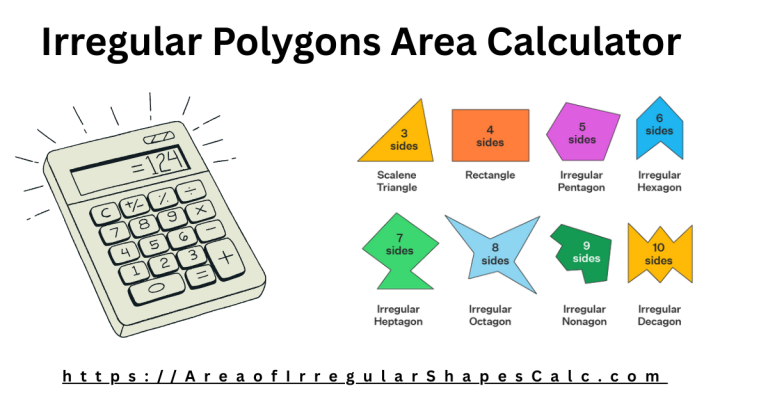
An irregular shape area calculator is designed specifically for spaces that do not follow standard geometric forms.
Instead of forcing the entire layout into a single formula, the calculator works with the natural structure of the shape. It allows the space to be treated as a combination of smaller, simpler parts. Each part is measured individually, and then everything is combined into one accurate total.
This approach mirrors how professionals measure floor plans in construction, architecture, and real estate.
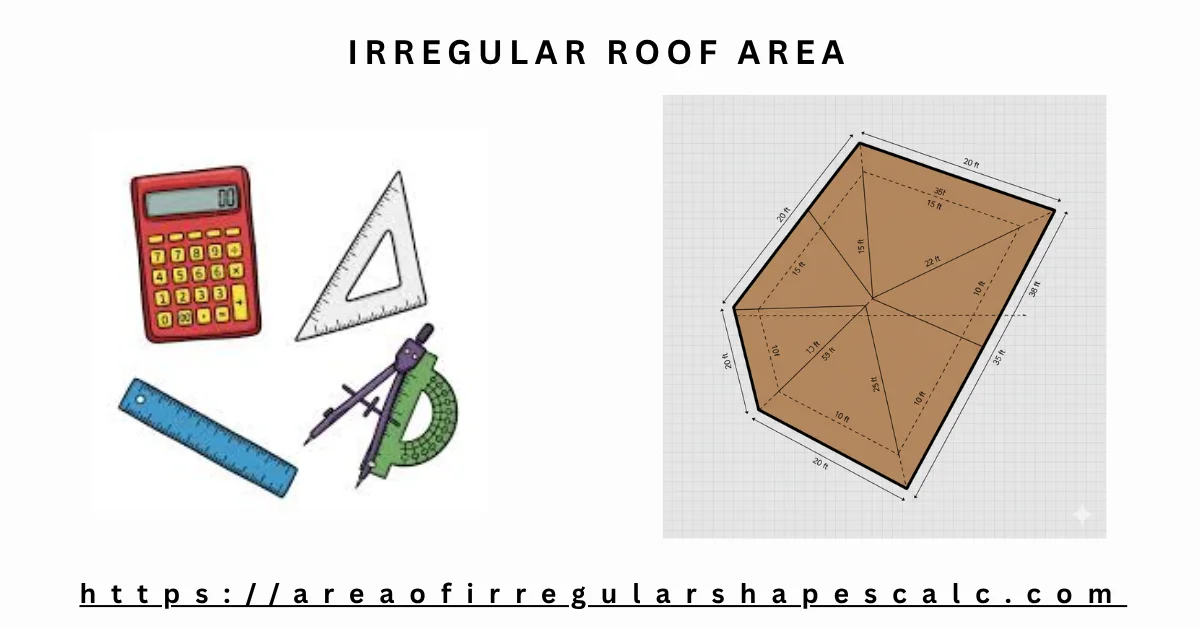
How to Calculate Floor Area of an Irregular Shape (Step-by-Step)
If you were to calculate the area manually, the process would begin by carefully observing the layout. The key is to stop looking at the space as one complex shape and instead see it as a group of smaller, familiar shapes.
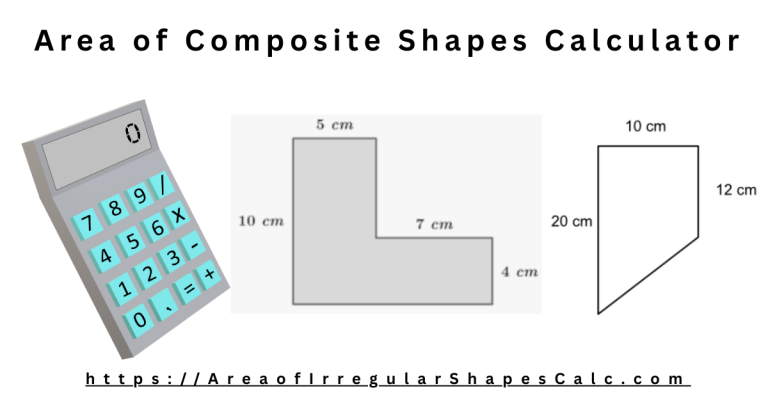
For example, an L-shaped room can be divided into two rectangles. Each rectangle can be measured separately using length and width. Once both areas are calculated, they are added together to get the total floor area.
This method works well in theory, but in practice, it becomes tedious when the layout includes multiple angles or irregular boundaries. That is why many people prefer using a calculator that can handle these divisions automatically.
Calculate Square Footage of an Irregular Shaped Room
In most real-world scenarios, the goal is not just to calculate area, but to determine square footage.
This becomes especially important when planning flooring, estimating materials, or calculating costs. Even a small miscalculation can result in either wasted material or unexpected shortages.
The process of calculating square footage for an irregular shaped room follows the same principle as area calculation. The space is divided into smaller sections, each section is measured in square feet, and the results are combined. However, because these measurements directly affect budgeting and material planning, accuracy becomes critical.
Using a square footage calculator for irregular shapes removes the risk of manual error and provides reliable results.
Floor Plan Area Calculator for Houses, Rooms & Layouts
When dealing with entire floor plans instead of individual rooms, the complexity increases further.
A house layout may include multiple rooms connected in non-uniform ways. Hallways, extensions, and open-plan designs create shapes that are difficult to measure using traditional methods. In such cases, calculating the total floor area manually can quickly become overwhelming.
A floor plan area calculator simplifies this by allowing you to work with the layout as it is, rather than trying to simplify it artificially. Whether you are measuring a single room or an entire property, the same logic applies—accurate measurement comes from correctly understanding the structure.
Draw Shape of Room and Calculate Area (Best for Complex Floor Plans)
For highly irregular layouts, the most effective method is often the most intuitive one: drawing the shape.
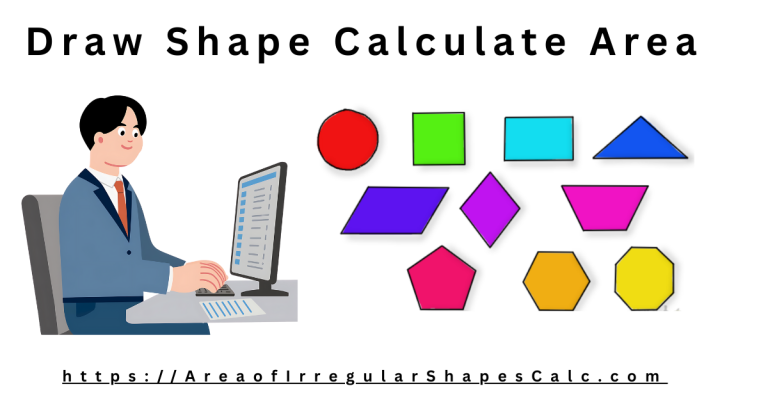
Instead of breaking the space into imagined sections, you can trace the outline of the room or floor plan directly. By marking each corner and defining the boundaries visually, the calculator can process the shape as a whole and compute the area automatically.
This approach is particularly useful when the layout includes multiple angles or when the boundaries are difficult to simplify into standard shapes.
Irregular Rectangle & Uneven Room Area (Special Cases Explained)
Sometimes a space appears rectangular at first glance but includes slight irregularities. One side may be longer than the other, or the angles may not be perfectly straight.
In such situations, relying on the standard rectangle formula can introduce small but important errors. These errors may not seem significant at first, but they can accumulate when calculating total floor area.
Treating the space as an irregular shape, rather than forcing it into a rectangle, ensures that every dimension is accounted for correctly.
Real-Life Use Cases (Why Accurate Floor Area Matters)
In real-world projects, floor area is not just a number—it directly affects decisions.
When planning flooring, ordering materials, or estimating costs, accuracy becomes essential. A slight overestimation can lead to unnecessary expenses, while underestimation can interrupt work and delay completion.
This is why professionals rely on accurate measurement methods and tools rather than visual estimation. An irregular floor area calculator helps achieve that level of precision without making the process complicated.
Common Mistakes When Calculating Irregular Floor Area
Most mistakes do not come from complex formulas—they come from incorrect assumptions.
A common issue is treating the entire space as a single block instead of recognizing its smaller components. Another frequent problem is overlooking small extensions or corners, which may seem minor but contribute to the total area.
There is also the issue of unit inconsistency. Mixing measurement units without proper conversion can distort the final result significantly.
Understanding these pitfalls makes it easier to approach the calculation correctly from the beginning.
When to Use an Irregular Floor Area Calculator
For simple rectangular spaces, manual calculation is usually sufficient.
However, as soon as the layout becomes complex, relying on manual methods increases the chances of error. Irregular shapes, connected spaces, and angled layouts all introduce challenges that are better handled with a dedicated tool.
Using a calculator in these situations not only saves time but also ensures that the final result is accurate and reliable.
FAQs
1. How to calculate square footage of an irregular shaped room?
The most practical approach is to divide the room into smaller regular sections, calculate each part separately, and then combine the results. A calculator simplifies this entire process.
2. How do you calculate floor area?
Floor area is calculated by measuring the dimensions of the space. For irregular layouts, the shape must be broken into smaller parts or calculated using a dedicated tool.
3. How to find area of a room with an uneven shape?
An uneven room should be treated as a combination of smaller shapes. Measuring each section carefully and adding them together gives an accurate result.
4. Can you draw a shape to calculate area online?
Yes, many tools allow you to draw the outline of a room or floor plan, making it easier to calculate the area without manually dividing the shape.
5. What is the best way to calculate floor space accurately?
The most reliable method is to measure the layout carefully and use an irregular shape area calculator to eliminate estimation errors.